
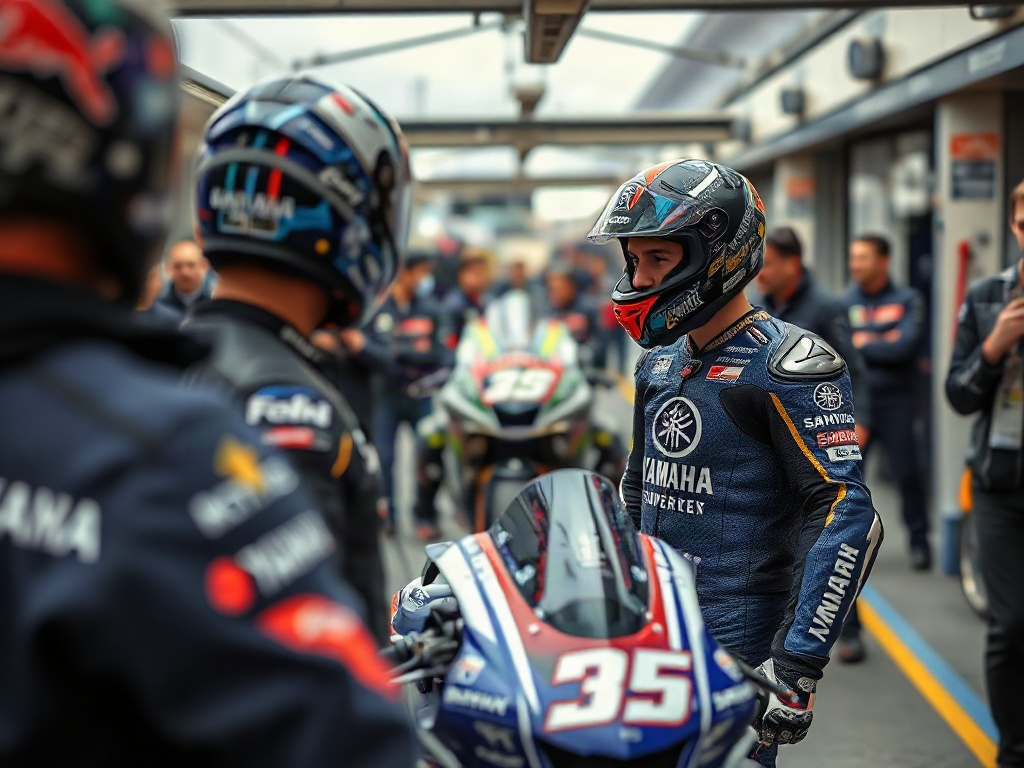
Jack Miller signed a contract with Yamaha’s factory World Superbike team on Aug. 20, 2026, to compete in the 2027 World Superbike Championship, according to reports from Motosprint. The move follows a drop in Miller’s wage demands and marks his transition from MotoGP to production-based Superbikes.
The contract signing took place on Aug. 20, 2026, according to reports from Motosprint, which first confirmed the deal’s completion. This agreement finalizes Miller’s transition from MotoGP, where he has competed for 12 seasons, to Yamaha’s factory World Superbike (WorldSBK) team for the 2027 season. Yamaha’s factory team will field Miller alongside Andrea Locatelli, establishing a new rider pairing for the Japanese manufacturer’s WorldSBK campaign.
Miller reportedly accepted a base salary near €750,000 (approximately £641,000), supplemented by performance-based bonuses, according to multiple motorsport news outlets.
Sources indicate that Miller’s move was facilitated by a significant reduction in his wage demands. Initially, Miller reportedly sought an annual salary of €1 million, a figure considered high within the Superbike market. However, later negotiations resulted in Miller accepting a base salary near €750,000 (approximately £641,000), supplemented by performance-based bonuses, according to multiple motorsport news outlets. This adjustment in financial terms allowed Yamaha to accommodate Miller within its 2027 Superbike budget, sources said.
Yamaha racing director Niccolò Canepa publicly confirmed in mid-July 2026 that the manufacturer had a seat available for 2027 but had not yet signed a rider. Canepa denied earlier rumors suggesting Miller’s contract was already finalized at that time, stating there was “no truth” to such claims. By late August, however, reports from Motosprint and corroborating outlets confirmed that Miller had officially signed with Yamaha.
The signing marks the end of Miller’s tenure in MotoGP, where he currently races for Prima Pramac Yamaha. He is expected to vacate his MotoGP seat at the end of the 2026 season, making room for younger talent such as Izan Guevara, according to industry sources. Yamaha’s decision to retain Miller within its racing structure by moving him to WorldSBK aligns with the manufacturer’s broader strategy to refresh its premier-class roster while leveraging Miller’s experience in a production-based championship.
Miller’s familiarity with Yamaha’s WorldSBK machinery was enhanced by his participation in the 2026 Suzuka 8 Hours endurance race, where he rode the Yamaha YZF-R1. Technical commentary has noted that Miller’s aggressive riding style and extensive circuit knowledge could translate well to the Superbike platform. Industry insiders expect Miller to compete as a front-runner, with his contract’s performance bonuses reflecting Yamaha’s anticipation of podium finishes and race wins rather than a purely developmental role.
The rider market implications of Miller’s signing extend to current Yamaha WorldSBK rider Xavi Vierge, who is reported to be at risk of losing his factory seat. Multiple sources suggest Vierge may move to Barni Ducati for the 2027 season, opening the position ultimately secured by Miller. Canepa had previously expressed satisfaction with Vierge and indicated ongoing negotiations to retain him, underscoring how Miller’s arrival altered Yamaha’s rider lineup plans.
The progression of Miller’s WorldSBK move was closely followed throughout 2026. Early reports in July and early August described Miller as “pondering” or “eyeing” a switch to WorldSBK without a finalized contract. Official denials from Yamaha representatives at that time contrasted with media speculation. By mid to late August, a consensus emerged among motorsport news outlets that Miller had signed, with Motosprint cited as the primary source confirming the Aug. 20 signing date.
Miller’s contract with Yamaha for the 2027 World Superbike Championship is pending formal announcement by the team and regulatory registration. The move is part of a wider reshuffle within the WorldSBK grid, which has seen several MotoGP riders explore opportunities in production-based racing as premier-class seats become increasingly limited. Yamaha’s strategy to integrate Miller into its factory Superbike program reflects both a competitive ambition and a commitment to maintaining continuity within its broader racing operations.

